


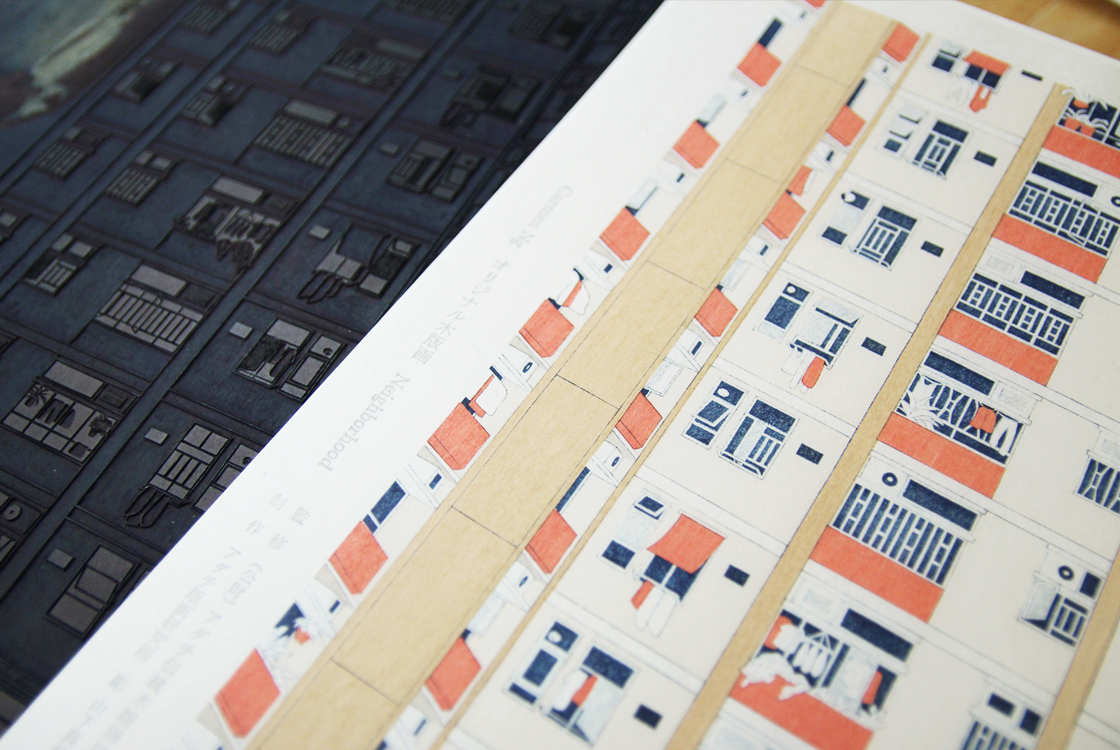
21st-Century Ukiyo-e Artists Go Global: International Entries Rise for the Adachi UKIYOE Award
Launched in 2009, the Adachi UKIYOE Award is an open competition organized by the Adachi Foundation for the Preservation of Woodcut Printing in search of the ukiyo-e artists of the 21st century. The Foundation, dedicated to training the next generation of carvers and printers in the traditional techniques of woodcut printmaking, established the Award to identify contemporary artists who could work alongside these artisans to create new ukiyo-e. Overseas applications have risen markedly in recent years, with artists based outside Japan winning prizes two years running. We spoke with the Foundation and with Carmen Ng, recipient of the 2024 Excellence Award.
In Search of 21st-Century Ukiyo-e Artists
The Adachi Foundation for the Preservation of Woodcut Printing is a public-interest incorporated foundation working to pass on Japan’s traditional woodcut printmaking techniques, exemplified by ukiyo-e, to the next generation. Among its core activities is the training of skilled artisans. Through its Advanced Skills Training Program, the Foundation provides aspiring artisans from the younger generation with the opportunity to study under active professionals. Several graduates of the program have gone on to apprentice further with veteran artisans and are now active as carvers and printers of traditional woodcut prints.
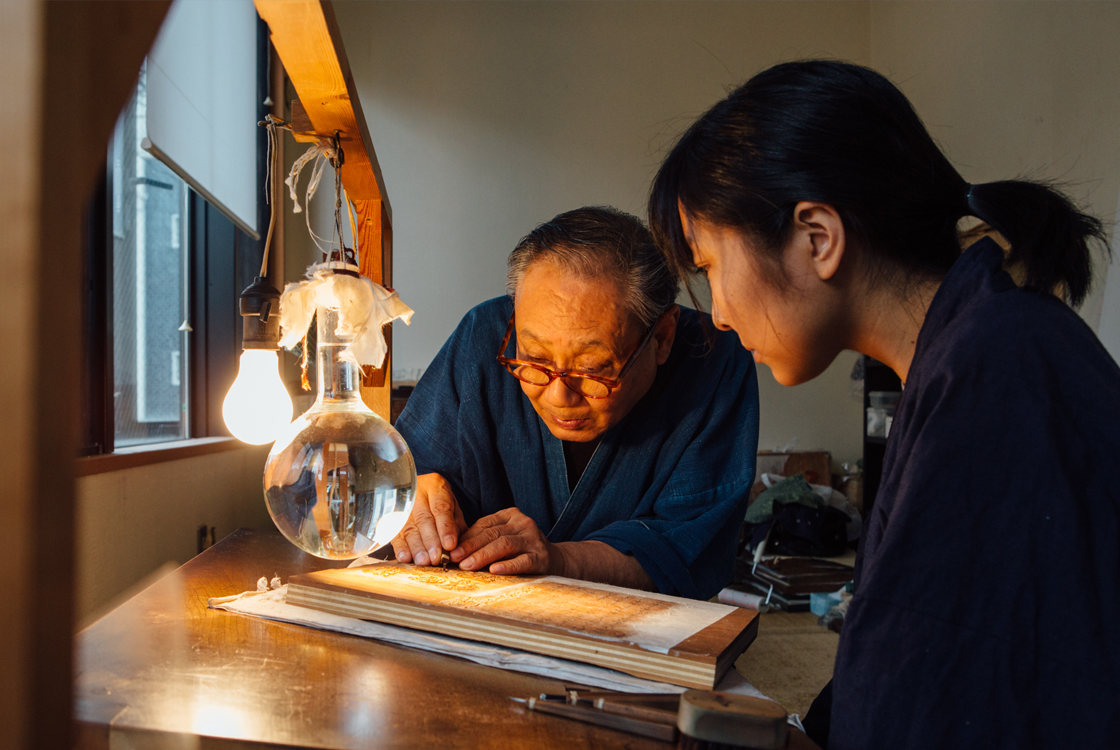
Ukiyo-e printmaking is built on a division of labor among three specialists: the eshi, who draws the original design; the horishi, the carver who cuts the woodblocks; and the surishi, the printer who inks the blocks and presses the image onto washi paper. Together, the skills and knowledge of all three have produced an extraordinary range of high-quality work over the centuries. For the Adachi Foundation for the Preservation of Woodcut Printing, finding contemporary artists to work with today’s carvers and printers is as vital to the survival of these traditional techniques as training the artisans themselves.
Since its founding, the Foundation has commissioned painters and other artists from a wide range of backgrounds to produce designs for woodcut prints, giving the next generation of carvers and printers opportunities to refine their craft. For young artisans, nothing compares to the experience of speaking directly with a living artist, absorbing their thinking and intentions, and creating new work alongside them. The Adachi UKIYOE Award, launched in 2009, has broadened the Foundation’s search for a more diverse pool of eshi. Winners receive a finished woodcut print of their design, produced by the Adachi Institute of Woodcut Prints' carvers and printers, as part of the award.
The Increasingly International Adachi UKIYOE Award
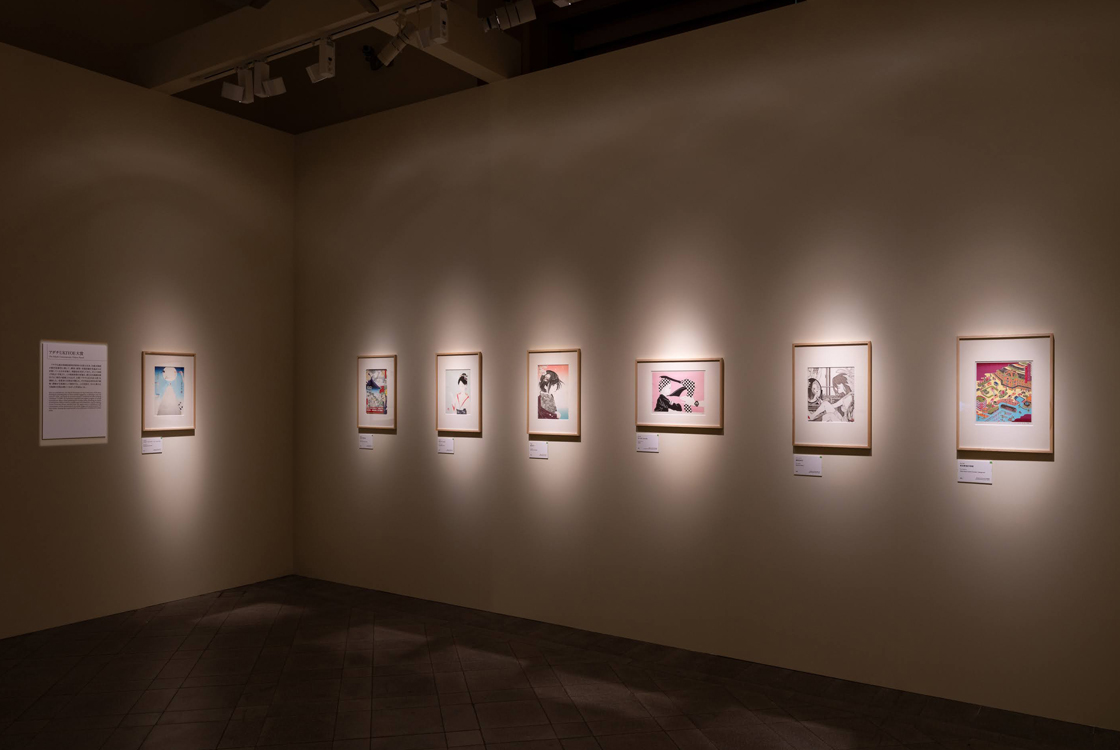
Now in its 17th edition, the Adachi UKIYOE Award has drawn a growing number of international entries in recent years, with artists based outside Japan winning awards two years in a row. The Foundation says it has repeatedly revised its application guidelines to broaden the pool of applicants.
Where the competition once called for works specifically intended for production as woodcut prints, applicants now submit a portfolio of materials showing their past work and broader practice. This allows the jury to assess each candidate’s full body of work and lowers the threshold for entry. The judging panel now includes printmaker Seiichiro Miida, art historian Yuji Yamashita, and gallerist Tomio Koyama, bringing together perspectives that allow for a multifaceted evaluation of artists working in any genre. The subsequent achievements of past winners have also done much to raise the Award’s profile.
Carmen Ng, recipient of the Excellence Award at the Adachi UKIYOE Award 2024, is a painter based in Hong Kong. She works primarily in watercolor and illustration, and her work has appeared in exhibitions, publications, and other contexts. We spoke with Carmen roughly a year after her win, just as the woodcut print she had developed with a young carver and printer at the Adachi Institute of Woodcut Prints was completed at the end of 2025.
——What inspired you to apply for the Adachi UKIYOE Award?
“After visiting the ukiyo-e exhibition in Japan, I became captivated by its beauty and developing a strong interest in this medium. This technique, achieved through layering colors, possesses a transparency quite similar to watercolor painting, which sparked my curiosity about the potential effects of combining various techniques. ”
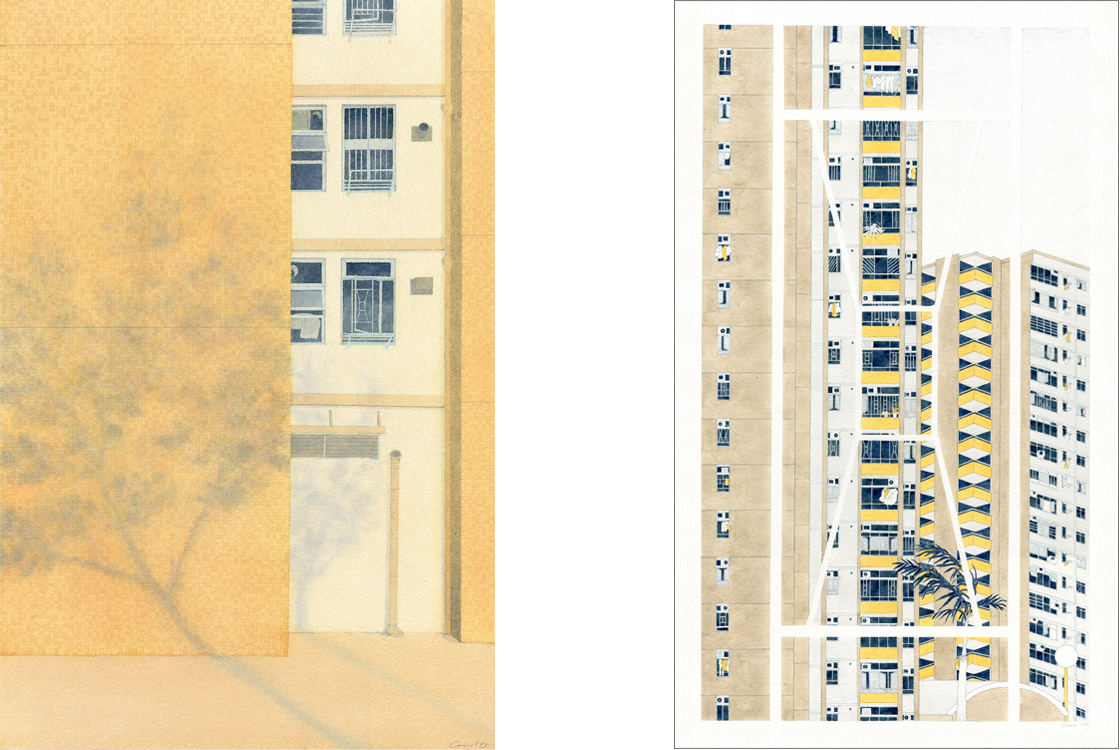
——The panel of judges was impressed by the transparency of your color, the delicacy of your line, and the bold framing of your scenes. The tranquility of your urban landscapes calls to mind Hiroshige’s One Hundred Famous Views of Edo, and seems to show a clear affinity for Japanese ukiyo-e printmaking, yet the work feels distinctly contemporary.
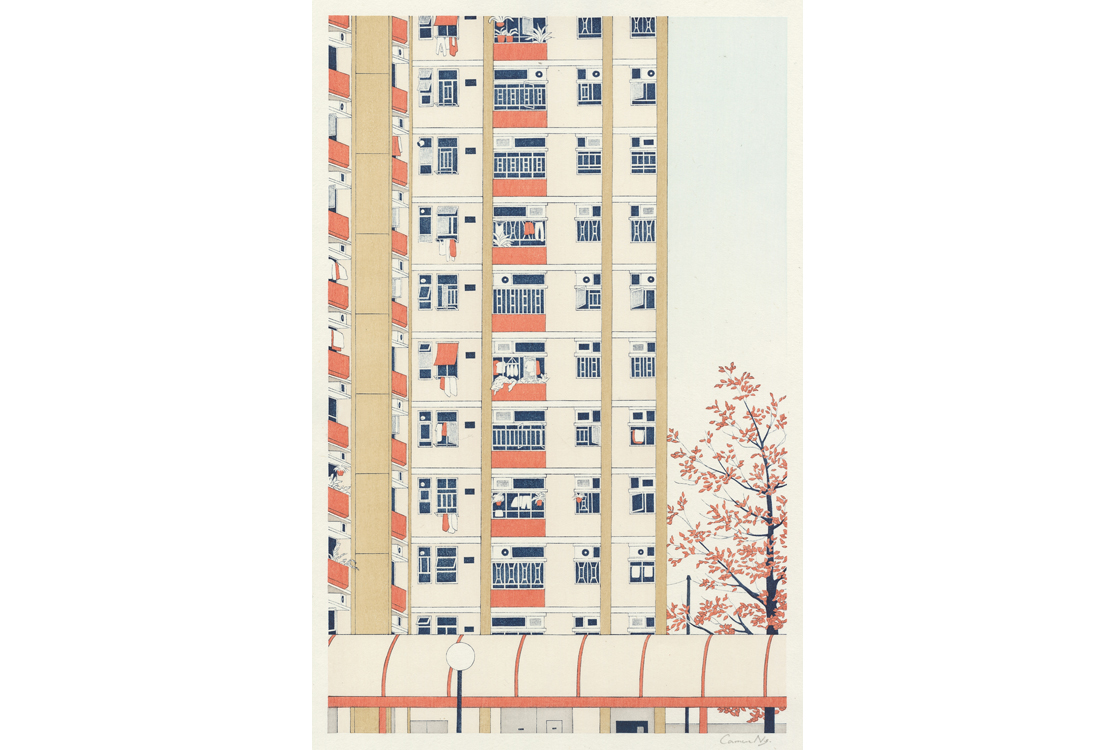
“My artwork is inspired by the environment I used to live in. The regular lines provide rational beauty, while subtle details reveal individuality. Although human beings are not directly shown, their presence is felt through window frame designs, hanging laundry, potted plants.”
That sense of human presence without any figures actually depicted, the texture of daily life, perhaps that’s part of what gives the work a quality similar to ukiyo-e.
“While residents may not interact often, their window decorations convey a peaceful, harmonious atmosphere.”
——Exactly. Even within these dense, high-rise environments, the daily lives of the people inside come through. Working with your style in mind, the Foundation’s carver and printer have now produced a woodcut print from your design. What were your impressions when you first saw the finished work?
“I was genuinely impressed with the final woodcut print. Initially, I worried that the intricate details of my painting, especially the fine lines, might get lost in the woodcutting process. However, the print captured those details remarkably well, and I was thrilled to see that the rich colors stayed true to the original tones of my artwork.”
——Has working on this project affected the interest in woodcut prints that inspired you to apply?
“This experience has deepened my interest in the expressive power of woodcut prints. I’ve always been interested in Ukiyo-e print, but I’ve never had the chance to learn more about it. I was particularly amazed by its ability to depict lines with such delicacy, while they showed me the carving process. During the testing phase, we adjusted the colors several times to achieve the desired effect. It showcases the texture of woodcut prints while also conveying the lightness of watercolor pigments. The rich texture of the prints complemented my watercolor works perfectly, which inspired me to further explore this medium in my creative work. ”
——Your enjoyment of the process really comes through, and it’s a pleasure to see. How did you find the application process, and your communication with the Foundation afterward?
“The application process and communication with the organizers afterward were seamless. They were friendly and supportive, patiently discussing various methods with me to achieve the best possible outcome. The delivery arrangements were also clear and thoughtful. Both the application and follow-up processes were very smooth, and I truly enjoyed this cooperation and value this experience.”
——Going forward, what artistic challenges would you like to take on?
“As an artist, my primary focus has been on watercolor paintings themed around urban landscapes. With this experience, I realized that woodcut prints depict my watercolor paintings well, and I am eager to explore this medium further. In the future, I also plan to experiment with different painting media, particularly acrylics and oil paints. I look forward to pushing the boundaries of my artistic expression.”
——We’ll be watching your work with great interest. What are your plans for the near future?
“I plan to publish a book that explores the diverse types of housing in Hong Kong. The book will cover a variety of architectural styles, from old buildings to modern designs, and the juxtaposition of skyscrapers with older structures. I aim to capture these unique environments and the stories they tell in this publication.”
——We’ll be looking forward to it. Congratulations once again on the award, and thank you for taking the time to speak with us.
Collaborating with Contemporary Eshi
Carmen Ng’s woodcut print was produced by carver Manaka Yamashita and printer Shota Naganuma. Both are alumni of the Adachi Foundation’s training program and now work as professional artisans, also regularly producing reproductions of Edo-period ukiyo-e. We asked each of them what they kept in mind, and what adjustments they made, in working on Carmen’s print.
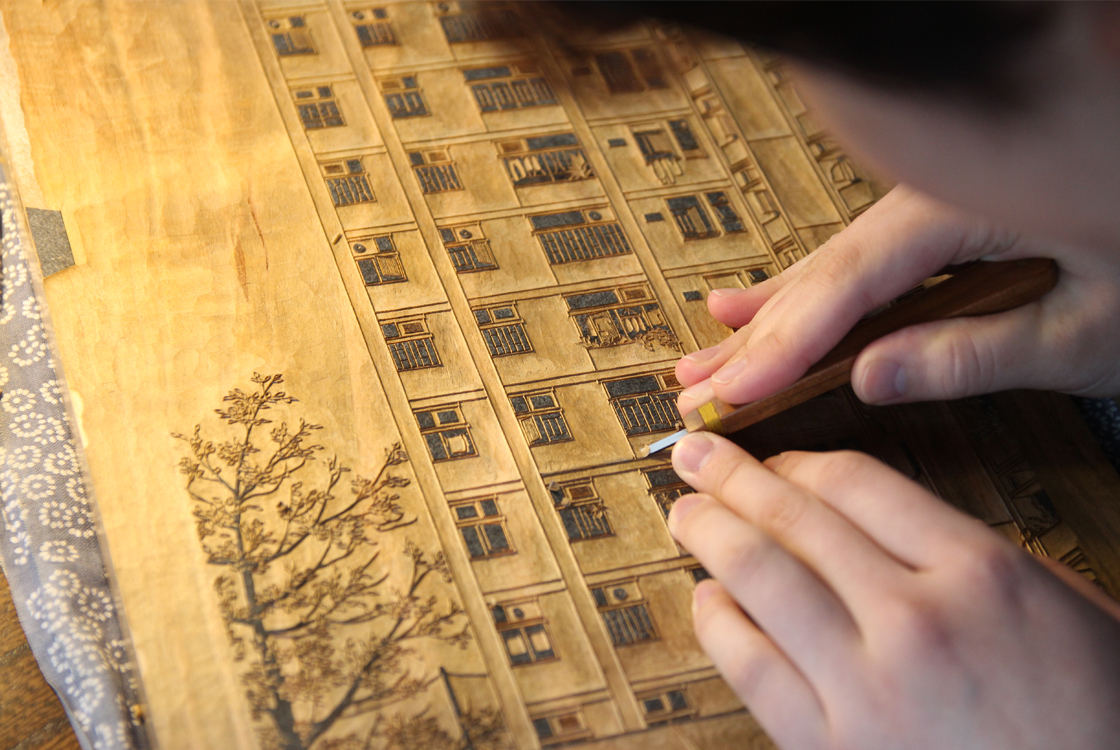
Manaka Yamashita, the carver: “The difficulty here was that the entire image consists of extremely fine, uniform lines. Carmen’s lines are drawn by hand but have remarkably little variation in width. They have a delicacy unlike anything in Edo-period ukiyo-e, even the fine hairline work in bijinga portraits of beautiful women. I cut the keyblock (the block that carries the outline) with great care to preserve the feel of her work. There was a tremendous amount to learn from this process technically.”
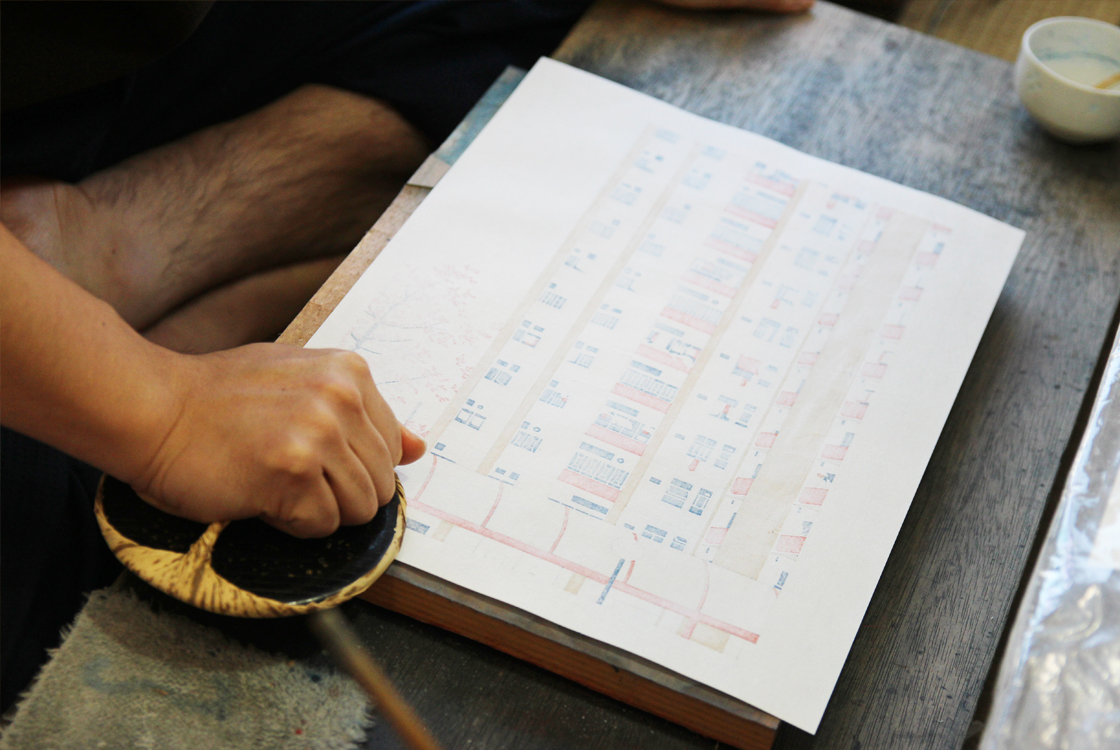
Shota Naganuma, the printer: “Color in ukiyo-e printmaking is built up by layering darker tones over lighter ones. Carmen’s work, by contrast, is composed of soft tones throughout, with fine drawn lines marking the boundaries between one pale color and another. This is close to what the printing trade calls kenuki-awase, where blocks must register against one another with absolute precision. The work demanded intense concentration, but by coordinating closely with Manaka from the carving stage onward, we were able to achieve a high level of accuracy. Carmen’s instructions were specific and easy to follow, and the process went smoothly. We also suggested adding a bokashi gradation to the sky in the background. I hope we’ve managed to convey the lightness of her palette here.”

Koko Nakayama, Chairperson of the Adachi Foundation for the Preservation of Woodcut Printing, who oversaw the production from start to finish, had this to say: “Collaborating with Carmen, who told us she had been moved by an ukiyo-e exhibition in Japan, was a deeply meaningful experience for us. The transparency of her watercolors is a natural fit with the woodcut technique of pressing water-based pigments into washi paper, and the qualities that make her work so compelling have come through beautifully in the printed version. The print is currently on view in the Foundation’s gallery, where it has captivated visitors. The 2025 Adachi UKIYOE Award drew 318 entries from outside Japan, and we look forward to discovering many more new eshi like Carmen in the years ahead.”
The Adachi UKIYOE Award will be held again in fiscal 2026. Grand Prize and Excellence Award recipients receive prize money together with the rare opportunity to have a woodcut print produced from their work in collaboration with contemporary carvers and printers. If you have a passion for drawing or painting, we encourage you to apply. Those whose interest has been sparked by the work of past winners may also wish to consider joining as a Supporting Member of the Foundation. Members (individual memberships are 20,000 yen per year) receive a new woodcut print each year, produced by contemporary carvers and printers. There is real satisfaction in supporting the continuation of a traditional craft and seeing the results in your own home.
Text: "Hokusai Konjaku" Editorial Department
Translation: Christopher Stevens
Cooperation: the Adachi Foundation for the Preservation of Woodcut Printing
- Share This Article:
- Tweet